
Easy Ways to Identify Fakes
Did you know that the global counterfeit fragrance market is worth billions? This staggering figure highlights the growing challenge for fragrance lovers everywhere. Many people unknowingly purchase imitation scents that lack the quality and safety of genuine products.
Counterfeit perfumes not only infringe on copyright laws but also pose serious health risks. These products often skip essential dermatological tests, leading to potential allergies and skin irritations. As a fragrance enthusiast, it’s crucial to understand the importance of authenticity when selecting your favorite scents.
This guide aims to equip you with essential skills to identify imitation fragrances effectively. You will learn to evaluate everything from price tags to the finer details of packaging. With the right knowledge, you can protect your investment and enjoy a delightful scent experience without the worry of counterfeits.
Key Takeaways
- Recognizing imitation scents is vital for any fragrance lover.
- Counterfeit perfumes can cause health issues due to untested ingredients.
- Learn to assess price and packaging for authenticity.
- Genuine fragrances undergo rigorous safety testing.
- Simple checks can save you from purchasing a counterfeit product.
Understanding How to Spot Fake Perfumes: Why It Matters
The allure of counterfeit fragrances can deceive even the most discerning noses. Understanding the risks associated with these products is essential for anyone who loves genuine scents. Counterfeit perfumes often contain harmful ingredients that can affect your health and well-being.
The Risks of Buying Counterfeit Perfumes
Counterfeit fragrances frequently include industrial chemicals and banned fixatives. These unregulated products do not undergo any dermatological testing, which increases the risk of skin reactions. Many fake perfumes rely on cheap synthetic ingredients that fail to create a rich, evolving scent.
Authentic perfumes are crafted with a complete olfactory pyramid. This includes distinct top notes, heart notes, and base notes that evolve harmoniously over time. In contrast, counterfeit perfumes lack this complexity, often smelling flat and fading quickly.
Common User Concerns and Warning Signs
Be alert for signs that a fragrance may be counterfeit. If a perfume smells predominantly of alcohol or lacks depth, it may be a fake. Additionally, fragrances that vanish from the skin much faster than expected can indicate a counterfeit product.
Investing in genuine perfumes protects your health and financial investment. Authentic fragrances retain their quality and can even become collectible. In contrast, counterfeit products lose value as soon as they are identified as fakes.
The Importance of Authenticity for Your Health and Investment
Understanding the importance of authenticity is crucial. The International Fragrance Association (IFRA) enforces strict safety standards that legitimate brands must follow. Counterfeit operations ignore these regulations, putting consumers at risk of allergic reactions and skin irritations.
Furthermore, the emotional disappointment of purchasing a fake perfume can be significant. Many people spend their hard-earned money expecting a luxurious scent experience, only to be let down by an imitation.
Counterfeit perfumes also harm the broader fragrance industry. They undermine the reputation of respected brands and contribute to illegal operations. Educating yourself on how to identify fake perfumes is an act of self-protection.

Price and Purchase: The First Indicators of Fake Perfumes
A perfume’s cost often serves as a crucial indicator of its legitimacy. If you encounter a deal that seems too good to be true, it likely is. Authentic designer fragrances rarely sell for a fraction of their retail price. Discounts of 20% to 30% during promotions are common, but anything more should raise a red flag.
Official retailers and brand websites provide a reliable source for your purchases. These channels maintain updated lists of authorized sellers. Always make sure to buy from these verified sources to guarantee authenticity.
Be cautious when considering high-risk sellers. Platforms like Facebook Marketplace and eBay can be breeding grounds for counterfeit perfumes. Check seller feedback scores carefully and avoid transactions that require PayPal Friends and Family payments, as these lack buyer protection.
Additionally, street markets and vendors abroad often sell fake perfumes. Authentic fragrance creation centers are usually located in cities like Paris, Geneva, or New York, not in tourist hotspots. If you see a perfume offered with cryptic codes, such as “No. 10 = Shalimar,” it’s a clear sign of a counterfeit.
When shopping online, verify that the website is officially recognized by the brand. Reading customer reviews can reveal patterns of complaints about fake products. Pay attention to the overall shopping experience. Trust your instincts about a seller or place that feels unprofessional or pushy.
Designer brands invest heavily in protecting their distribution networks. If a seller offers deeply discounted perfumes outside of authorized channels, they are likely dealing in counterfeits. Taking the time to research sellers and compare prices will save you from the frustration of discovering that your new perfume is fake.

Examining Packaging and Bottles: Key Physical Checks
The way a perfume is packaged often speaks volumes about its legitimacy. Counterfeiters often struggle to replicate the high standards of quality that genuine brands maintain. A careful examination of the packaging and bottle can reveal crucial clues about the product’s authenticity.
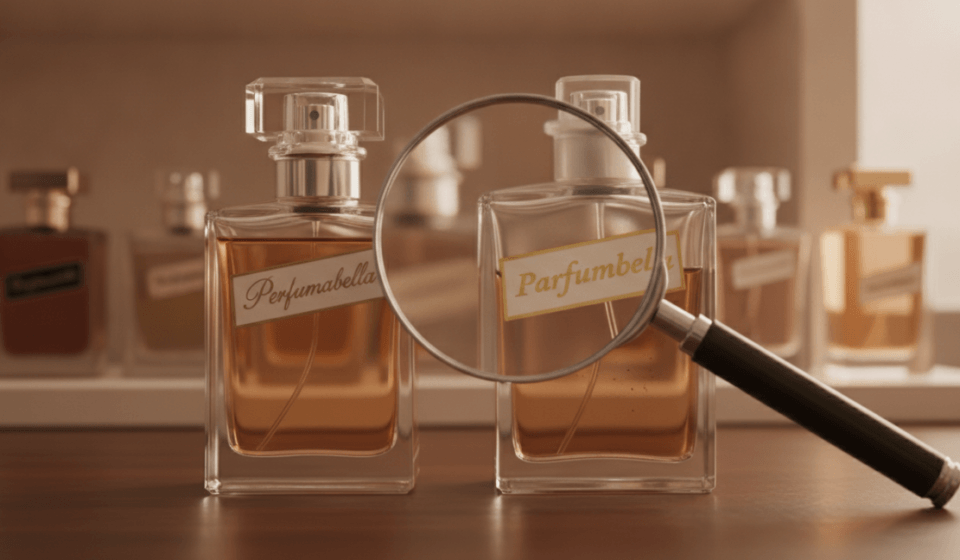
Misspelled labels on perfume bottles are clear indicators of fake fragrances. Authentic brands take great care in their packaging, ensuring that every detail is correct. A misspelled name or incorrect font can often signal that the product is not genuine.
Additionally, the selling environment is another red flag. If perfumes are displayed on a dilapidated table in a questionable location, it’s unlikely that these items are worth their purported value. Legitimate fragrances are typically sold in reputable stores or authorized retailers.

Inspecting Cellophane Wrapping and Outer Boxes
Start your inspection with the cellophane wrapping on the outer box. A genuine perfume will have tight, neatly folded wrapping. Look for any visible adhesive marks or loose, wrinkled areas. These can indicate a sloppy counterfeit job.
The outer box itself should feel substantial and sturdy. Authentic brands invest in high-quality cardboard with sharp, clean edges. If the box feels flimsy or poorly constructed, it may be a sign of a fake.
Labels, Printing Quality, and Brand Details
Examine every label on the box and bottle closely. Authentic labels feature perfectly aligned text and crisp printing without blurring or fuzzy edges. Pay attention to the fonts, ensuring they match the brand’s official design standards.
By law, genuine perfume packaging must display the main components, a complete list of allergens, a barcode, a batch number, a traceability code, the alcohol degree, and a recycling symbol. The absence of any of these elements is a clear red flag.
Internal Packaging and Bottle Construction
Don’t overlook the interior cardboard support inside the box. High-end brands engineer these inserts to hold the bottle securely. If the bottle rattles when you shake the box gently, you may be dealing with a counterfeit.
Inspect the bottle itself for signs of quality. Authentic bottles are crafted from high-quality glass, featuring a smooth, seamless surface free of air bubbles or visible mold lines. The cap should feel weighty and snap securely into place.
Checking Batch Numbers, Barcodes, and Ingredients List
The batch number printed on the bottom of the bottle must match the batch number on the outer box exactly. Any mismatch or smudged printing can indicate a fake. Check that the barcode and ingredients list are accurate and complete.
Legitimate brands are meticulous about regulatory compliance, while counterfeiters often omit details or include nonsensical ingredient listings. Make sure to verify all information thoroughly.

Verifying Authenticity Using QR Codes and Digital Tools
In today’s digital age, verifying the authenticity of perfumes has never been more accessible. With advancements in technology, brands are embedding QR codes into their packaging, making it easier for consumers to confirm their purchases.
How to Inspect and Scan QR Codes Properly
Begin your digital inspection by examining the QR code closely. A genuine QR code features high-resolution printing with sharp edges and clear fonts. Look for symmetrical placement, centered alignment, and a surface that is waterproof and scratch-resistant. In contrast, counterfeit QR codes often have blurry or uneven printing, off-center placement, and peeling labels.
When scanning, use a trusted QR scanner app from a reputable developer. Make sure it only requests minimal permissions, ideally just camera access. Hold your phone about 6 to 8 inches away from the QR code in a well-lit area for the best results.
Confirm Website Legitimacy and Product Details
After scanning, check the URL that appears in your browser. A legitimate QR code should take you directly to the brand’s official website, with an exact match and no misspellings. The landing page should display product-specific information, including fragrance notes, images, and packaging details that correspond with the physical product.
Pay attention to any broken links, blurry images, or obvious spelling mistakes. These can indicate a fraudulent website linked to counterfeit products.
Using Batch Code and Barcode Databases for Verification
Batch code verification is another effective method. Tools like CheckFresh allow you to decode the manufacturing date and production location of a perfume. If the code returns an unrealistic date, it may signal a counterfeit.
Make sure the batch code on the bottle matches the one printed on the outer box. Never confuse this short alphanumeric batch code with the longer 12- or 13-digit barcode, as they serve different purposes in verification.
Recognizing Digital Red Flags and Limitations of QR Code Checks
While digital verification is powerful, it’s not foolproof. Sophisticated counterfeiters can replicate QR codes that link to convincing but fraudulent websites. Therefore, always combine digital checks with thorough physical inspections of the perfume’s packaging, bottle, and scent quality.
Utilizing barcode lookup tools like UPCitemdb can confirm that the product details match the perfume you have. Any discrepancies in fragrance name, bottle size, or concentration level may indicate tampering or counterfeiting.
The Scento Decoder is a valuable resource for batch-code reading, covering over 600 brands and providing manufacturing dates. This adds another layer of verification to your authenticity checks.
Conclusion: Your Guide to Confidently Spotting Fake Perfumes
The fragrance industry is constantly evolving, yet the threat of counterfeit products remains a significant concern. Identifying these imitations requires attention to detail and a few simple steps. Start by examining QR codes and using trusted apps for scanning. Always verify the authenticity of the linked website.
Cross-check batch codes through platforms like CheckFresh and scrutinize the packaging. Counterfeiters may replicate external details, but they often overlook subtle aspects such as bottle weight or the complexity of the scent itself. Remember, genuine perfumes unfold in layers of top, heart, and base notes, while counterfeits often smell flat and overly alcoholic.
Shop luxury fragrances through authorized retailers. Trust your instincts when something feels off. A few extra minutes spent verifying authenticity can save you from a disappointing purchase and ensure a true luxury fragrance experience.
FAQ
What are the common signs of counterfeit fragrances?
Look for inconsistencies in packaging, such as poor printing quality, misspelled brand names, and unusual bottle shapes. Authentic products usually have high-quality finishes and details.
How can I ensure I’m buying genuine products?
Purchase from authorized retailers or official brand websites. Be cautious of sellers on marketplaces that offer prices significantly lower than retail.
What should I check on the bottle itself?
Inspect the bottle’s construction, including the glass quality and cap fit. Authentic bottles are often heavier and made from high-quality materials.
Are there specific websites I can use to verify authenticity?
Yes, many brands provide official websites where you can find information on how to verify their products. Additionally, batch code and barcode databases can help confirm legitimacy.
What role do QR codes play in verifying fragrances?
QR codes can provide additional product information and authenticity checks. However, ensure you scan them from reputable sources to avoid misleading links.
How can I identify a good deal versus a scam?
If a price seems too good to be true, it likely is. Always compare prices across multiple reputable sources before making a purchase.